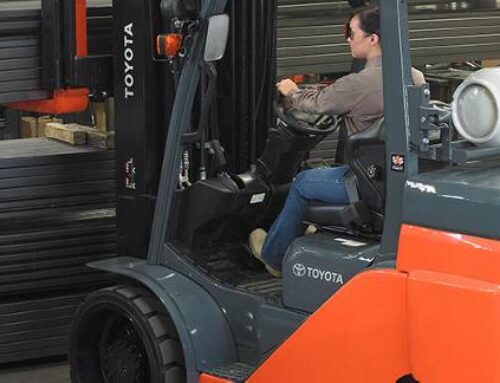
Two Toyota forklifts with similar capacity labels may be built for different work. One could be a compact electric counterbalance truck; another could be configured for outdoor handling. A reach truck adds another set of choices for storage work.
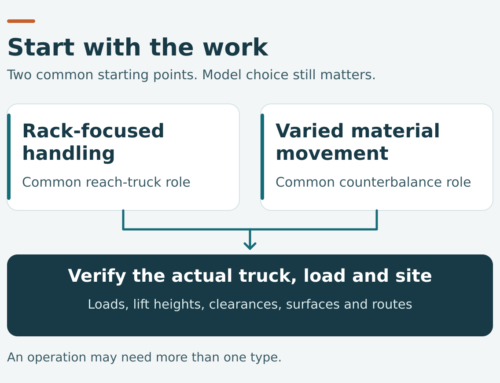
Rather than compare the entire catalog, start with the part of the operation that defines the job. Is it a tight maneuver in a warehouse, repeated rack placement, or travel through an outdoor work area? Use that requirement to build a shortlist, then have the complete configuration checked against your loads and site.
Watts offers new and used Toyota equipment. The examples below are product families to discuss, not a statement of local inventory or a recommendation without an application review.
Compact indoor work with several handling tasks
For general warehouse handling, compare the Toyota Core Electric with the 3-Wheel Electric where the application calls for a compact counterbalance truck. Toyota describes the Core Electric for indoor and warehouse work and offers a short version within its 3-Wheel Electric family.
The question is not simply whether three or four wheels are better. Ask the dealer to compare the proposed trucks with your loaded pallet through the maneuver that matters. Include the approach, turn, placement, and exit. Also review the doorways and overhead restrictions along the route.
For example, imagine that a truck travels easily through the main aisle but struggles to line up with a storage position near a column. A demonstration in an open area would miss that constraint. Put the difficult location on the comparison sheet.
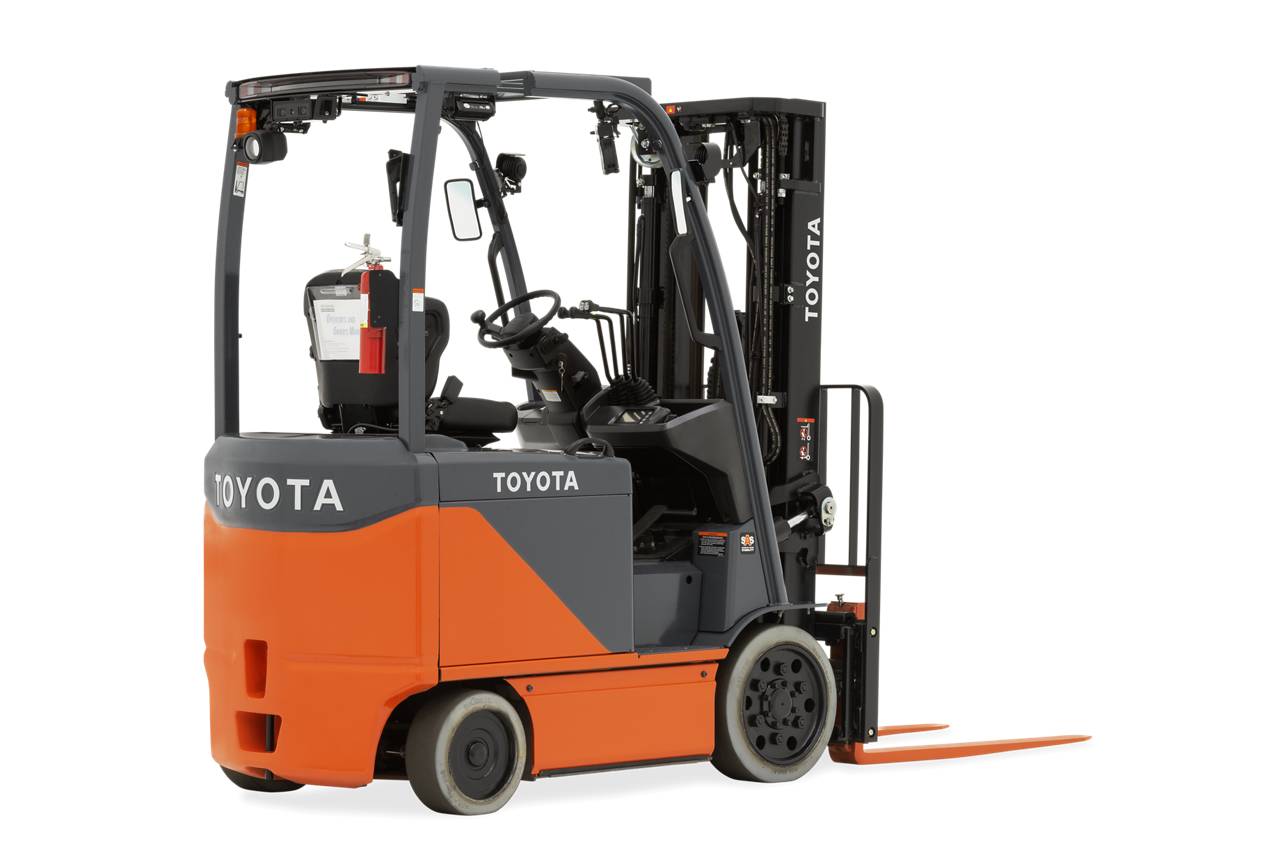
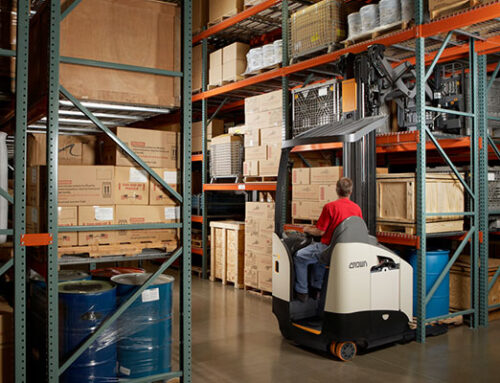
Toyota manufacturer product photo. Equipment shown is illustrative and does not indicate Watts inventory.
Repeated pallet placement in racks
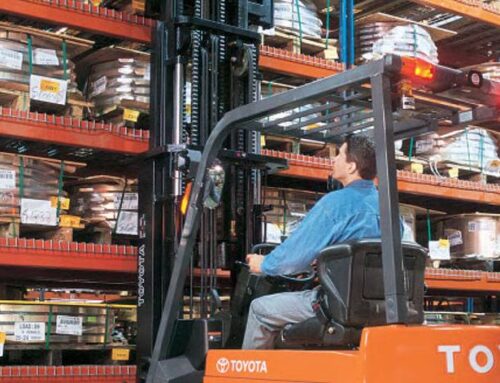
If storage placement dominates the work, include Toyota’s Reach Truck in the conversation. Toyota lists single- and double-reach configurations, along with different operator-stance options.
Those choices should follow the rack design and task. Describe storage depth, pallet dimensions, required height, and working clearances. Ask the dealer to identify which configuration is being evaluated, then check capacity for the intended load and height.
Do not read a family page as if every listed maximum belongs to one truck. The highest lift height, largest capacity, and smallest dimension may come from different configurations. Have the proposed model and options spelled out in the quote so you can connect the recommendation to the specification sheet.
If operators spend much of the day in rack aisles, include their work in the assessment. Ask them to evaluate visibility and the handling sequence during an appropriately arranged demonstration. Their observations should be specific: which task was easier to see, where positioning became awkward, and which questions remain.
Outdoor handling with electric or engine-powered options
Outdoor work does not automatically mean an engine-powered forklift. Toyota’s 80V Electric Pneumatic is presented for indoor and outdoor applications. The Core IC Pneumatic provides an internal combustion family to evaluate for outdoor handling.
Compare the actual route: surfaces, grades, weather exposure, loads, and access. Then compare the energy arrangements required to support the working day. An outdoor-capable electric model still needs a charging plan; an engine-powered option still needs the appropriate fuel and operating-environment review.
Avoid transferring a statement about one product family to all Toyota trucks. The correct tire, configuration, and operating limits need to be confirmed for the model being proposed. Applicable site and regulatory requirements also belong in that review.
Read the quote more closely than the headline specification
Ask for a configuration summary alongside the price. It should identify the truck, mast, forks, attachments, tires, and power equipment. List options separately so you can see what is included and why it is being recommended.
Use a comparison table with your requirements down the left side and the proposed trucks across the top. Mark each requirement as confirmed, not met, or awaiting information. That makes a missing detail visible before a lower price distracts from it.
Include these questions:
- Is capacity confirmed for our load, attachment, and required height?
- Has working clearance been evaluated with our pallet, not just the truck body?
- What battery, charger, or fuel arrangement is included?
- Which requested features are standard, optional, or unavailable on this configuration?
- What is the plan for maintenance, operator preparation, and delivery?
Bring one ordinary task and one difficult task
A useful equipment discussion needs both. The ordinary task shows how the truck will spend most of its time. The difficult task reveals a condition that could rule out an otherwise attractive choice.
Send Watts your load details, route photos, storage requirements, and current truck information. Include what has changed since the current equipment was selected. Contact Watts Equipment to compare Toyota options, and discuss service support as part of the same decision.