The lowest monthly payment is an easy number to notice. It is a harder number to interpret without knowing how long you need the truck, what work it must do, and what the agreement includes.
Buying, leasing, and renting can each make sense. The useful starting point is how certain you are about the work ahead. A stable daily task, a new contract with an uncertain future, and a short seasonal peak deserve different comparisons.
Write down what you know—and what may change
Start with the application: loads, lift height, attachments, routes, operating environment, and work schedule. The acquisition method does not make an unsuitable truck more useful.
Next, separate firm requirements from assumptions. Perhaps you know the current shipping volume but not whether a new customer will renew. Perhaps the truck will be needed all year, but the layout is changing in six months.
Record those uncertainties alongside the expected duration. This gives the dealer something more useful than “we want the cheapest option.” It also helps you see which agreement would be difficult to change if the work develops differently.
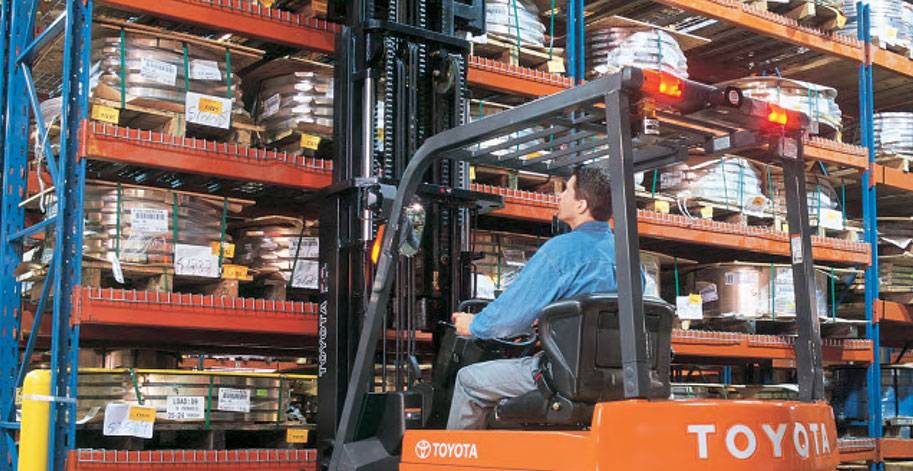
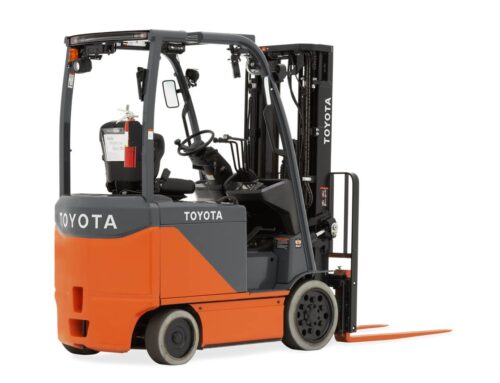
Toyota manufacturer photograph illustrating warehouse equipment use; not a Watts customer, financing offer, or inventory listing.
Buying: understand the responsibilities that stay with you
Ownership may suit a well-understood, continuing requirement. It gives you an asset to keep using, but the purchase decision still needs a plan for maintenance, repairs, energy equipment, and eventual replacement or disposal.
Compare new and used options on the same application and condition basis. A lower used price can be attractive, but include any immediate work, battery or charger needs, and uncertainty identified during inspection.
Ask what changes would make the purchase less suitable. If the next storage project calls for a different truck type, that possibility belongs in the decision now. Avoid assigning a resale value without a reasonable basis; treat it as an assumption to test rather than money already recovered.
Leasing: read beyond the payment
A lease can provide a defined equipment arrangement over an agreed term. The details determine how well it fits your operation.
Toyota’s guide to leasing a forklift highlights matters such as utilization and early termination. It also notes that maintenance is not automatically included in every lease. Request the actual proposed terms rather than assuming all leases work alike.
Ask these questions before comparing payments:
- What term and usage allowance are included?
- How is usage measured, and what happens if it exceeds the allowance?
- Which maintenance or repairs are included, excluded, or separately billed?
- What happens if the application or location changes?
- What would early termination involve?
- What are the return conditions and any end-of-term purchase options?
Have the appropriate finance or accounting adviser review the agreement for your business. A generic article cannot establish the tax or accounting outcome of a particular contract.
Renting: compare flexibility with the whole rental bill
Rental can be worth discussing for a defined project, seasonal demand, temporary replacement, or an application you are still evaluating. Watts describes short-term, long-term, and seasonal rental options.
Ask about the exact equipment, availability, minimum period, usage allowance, delivery and pickup, extension terms, and return requirements. Clarify service responsibilities and what happens if the truck needs attention. Do not infer that every possible cost or damage event is covered because a rental includes maintenance support.
For occasional work, compare the actual pattern. Several small rental periods with separate transport charges may lead to a different conclusion than one continuous period. Conversely, owning equipment that is rarely needed still brings responsibilities between jobs.
If a rental is intended to test an application, agree on what you need to learn. Record the loads, routes, working time, and problems encountered. Confirm that the trial configuration represents the equipment you might later acquire; do not assume a rental payment will become purchase credit.
Put all three options on the same timeline
Choose a comparison period that matches the business decision. Ask for quotes based on the same suitable equipment and expected use, then record the assumptions clearly.
| Comparison item | What to include |
|---|---|
| Upfront commitment | Purchase payment, initial lease charges, or rental start costs |
| Ongoing charges | Quoted payments, energy, and agreed support costs |
| Usage | Expected hours and any excess-use terms |
| Site needs | Charging, fuel arrangements, or other preparation |
| Change of plan | Extension, early exit, replacement, or disposal questions |
| End of period | Return obligations, purchase options, or retained equipment |
Do not make an uncertain residual value look as firm as a written payment. Likewise, label a service estimate as an estimate. The comparison becomes more useful when the unknowns are easy to see.
Ask Watts for a comparison tied to your job
Bring the requirements, likely duration, and the two or three things most likely to change. Request complete proposals and identify the questions that must be answered before deciding.
Watts Equipment’s forklift page describes equipment acquisition options, and its rental team can discuss temporary needs. Contact Watts to compare the available arrangements. A suitable decision accounts for both the truck you need today and the commitment you can reasonably make.