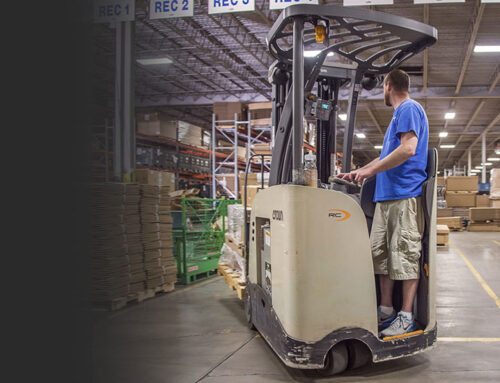
An electric forklift quote can look complete while leaving a practical question unanswered: how will this truck be charged at your building?
That question involves more than finding an outlet. The truck, battery, charger, electrical supply, and working schedule need to work together. Getting those details into the same conversation helps prevent a delivery from turning into a second project.
Start with the equipment you actually have
If you are replacing a charger, gather the truck’s model and serial number, battery identification, existing charger information, and photographs of the labels. Include the symptoms or reason for replacement. A charger that stopped working, a newly purchased used truck, and a planned battery conversion are different requests.
Do not choose a replacement simply because it fits the available space or resembles the old unit. Ask the supplier to confirm the complete pairing and identify any site changes required. Toyota’s electric forklift FAQ recommends manufacturer-approved charging equipment and notes that battery conversion depends on the truck and battery specifications.
For a new truck, request the battery and charger details on the quote. “Electric forklift” alone does not tell you what is included, how it will be charged, or what must be ready before delivery.
Record the breaks that really happen
A charging plan should use the work schedule the team follows, including busy days. Write down when the truck starts, its intensive working periods, breaks, shift changes, and any overnight access restrictions.
Then ask who uses it outside that schedule. A truck shared with shipping may leave the charging area when production assumes it is available to charge. That is a coordination problem worth finding before equipment arrives.
Toyota describes conventional, fast, and opportunity charging, with suitability depending on the battery, equipment, and operation. Conventional charging generally uses a longer off-duty period; fast and opportunity approaches make use of shorter windows under an appropriate system and schedule.
Toyota distinguishes the higher charging rates used for fast charging from the lower rates used for opportunity charging; the supplier should specify the approach for the exact system. These are choices to evaluate with the supplier, not interchangeable instructions. Ask for the charging method recommended for your exact system and a written explanation of how it supports the expected work.
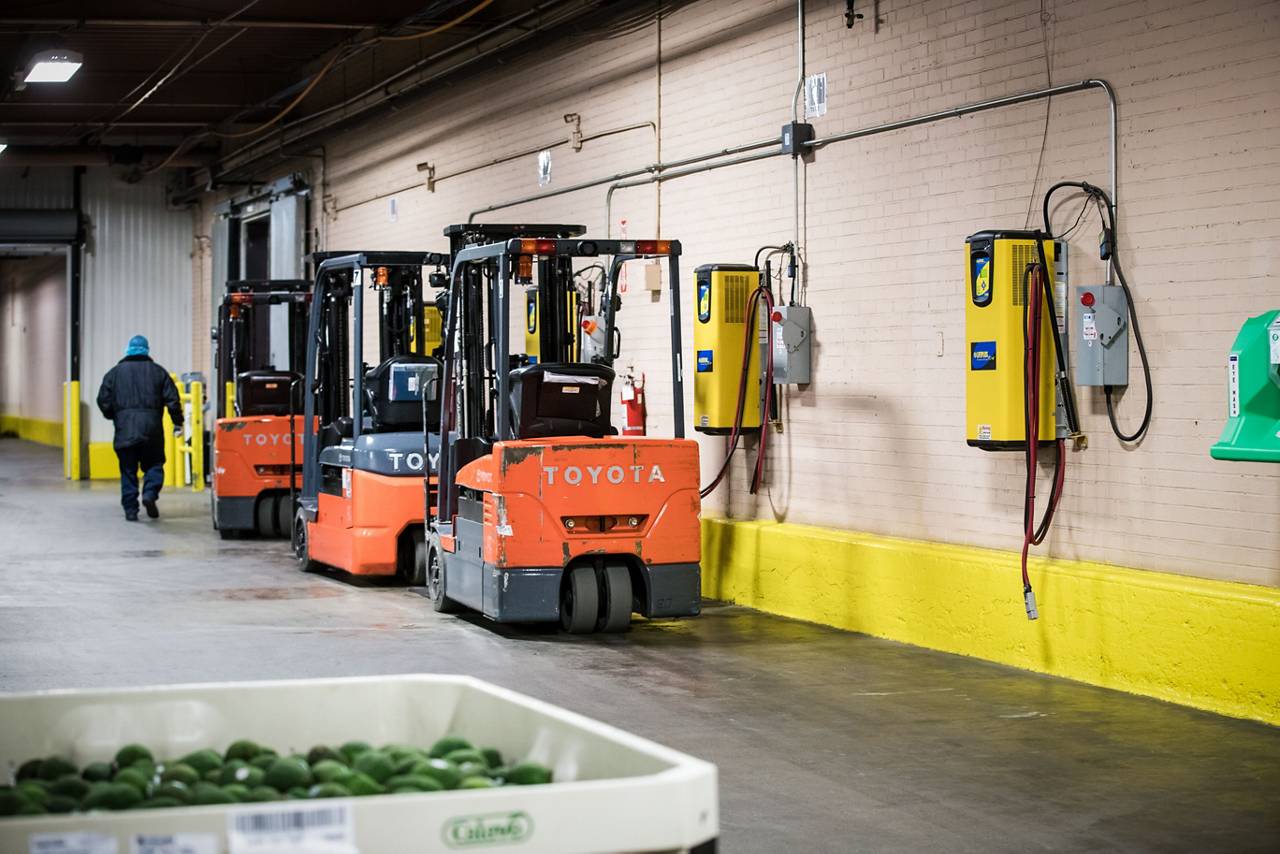
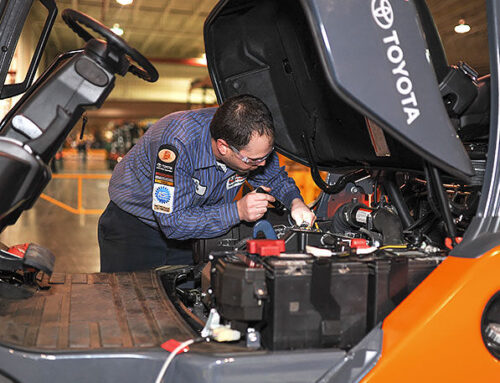
Toyota manufacturer photograph illustrating forklift charging infrastructure; not a Watts installation or customer-site claim.
Treat electrical readiness as a separate deliverable
Send the proposed charger specifications to the qualified person responsible for the building’s electrical work. Have that person confirm the required supply and installation scope. Do not assume an existing connection is suitable because another charger once used it.
Agree on who will arrange the work and how completion will be confirmed. If several chargers may run at once, make that operating pattern clear. A future fleet expansion also belongs in the discussion now, even if only one truck is being purchased.
The useful handoff is specific: the equipment supplier identifies the proposed system and its requirements; the appropriate site professionals confirm how the building will support it. Record costs and timing separately so unfinished electrical work is visible in the project schedule.
Plan the charging area around people and equipment
Choose the area with the operation and applicable requirements in mind. Consider how trucks approach it, where cables will sit, who can access it, and whether charging will interfere with staging or pedestrian routes. Ask which provisions apply to the selected battery chemistry and charging system.
Assign responsibility for routine care and for reporting damage or faults. Battery types have different care requirements; use the instructions for the installed equipment. Avoid carrying over a procedure from the previous battery just because the replacement fits the same truck.
Toyota’s energy-solutions information describes several power options and the use of a power study. If the schedule is demanding or poorly understood, ask whether an assessment would provide a firmer basis for selecting the system.
Use a readiness sheet before delivery
Keep this short enough that someone will maintain it:
| Item | What should be confirmed |
|---|---|
| Truck and battery | Exact identities, approved compatibility, and included equipment |
| Charger | Specified model, charging approach, and battery compatibility |
| Work schedule | Expected duty, available charging windows, and shared use |
| Electrical preparation | Requirements, responsible contractor, cost, and completion date |
| Charging area | Location, access, traffic, and applicable provisions |
| Handover | Instructions, responsible staff, and fault-reporting contact |
Mark unanswered items as open rather than filling the gaps with assumptions. If the plan depends on a lunch break that routinely disappears, resolve that before accepting the charging strategy.
Bring the whole system into the equipment discussion
For an existing truck, bring the labels and work history. For a new installation, bring the schedule, proposed location, and a contact for building electrical questions. Include seasonal peaks and periods when equipment will sit unused.
Watts Equipment’s Crown dealer listing includes battery solutions. Contact Watts to discuss the proposed equipment and support scope, and use the service team for an existing-truck issue. A clear charging plan makes the electric forklift decision more complete.