“We need to automate” is a difficult project brief. “We need to move finished pallets from this line to these staging positions throughout the shift” gives a supplier something to evaluate.
Before comparing automated equipment, choose a job and describe its boundaries. What starts the work? What must be moved? Where does the task end? What happens when the normal process cannot continue?
You do not need a fully automated warehouse to ask those questions. You do need enough detail to judge whether a proposed system fits the work—and whether a pilot has actually improved it.
Name the problem before choosing the equipment
Write the constraint in operational terms. It might be repeated travel between two areas, difficulty keeping a production line supplied, or an outbound handoff that becomes congested during a specific period.
Separate the problem from the first solution suggested. If pallets wait because a release decision is delayed, changing the way they travel may not remove that wait. Follow several loads through the process and record where the time goes.
Toyota organizes its automation solutions around receiving, material transportation, storage, picking, and shipping. That task-based view is useful when deciding where your first project belongs.
Document normal work and the exceptions
Record the range of loads, the pickup and drop-off conditions, and the traffic along the route. Include what happens when a pallet is damaged, the destination is occupied, a label cannot be read, or an urgent order changes the sequence.
Those exceptions are part of the job. Ask the supplier to explain which ones the system handles, which ones require a person, and how that person is notified. A demonstration of a perfect pallet on an empty route cannot answer every question about a working shift.
Use examples from your own observations rather than guessing an exception rate. If records are unavailable, a short observation period can give the project team a better starting point than a single average daily volume.
Review both ends of the handoff
An automated movement needs someone or something to say that a load is ready and that its destination is available. Identify those signals and who maintains them.
Ask whether the proposal depends on your warehouse software, a production system, a manual request, or another control. List the information that must pass between systems. Then ask what happens if that information arrives late or is wrong.
This is also where warehouse, production, IT, safety, maintenance, and the supplier need a shared discussion. Assign a person to each interface. An equipment quote alone does not establish who owns every integration or operating procedure.
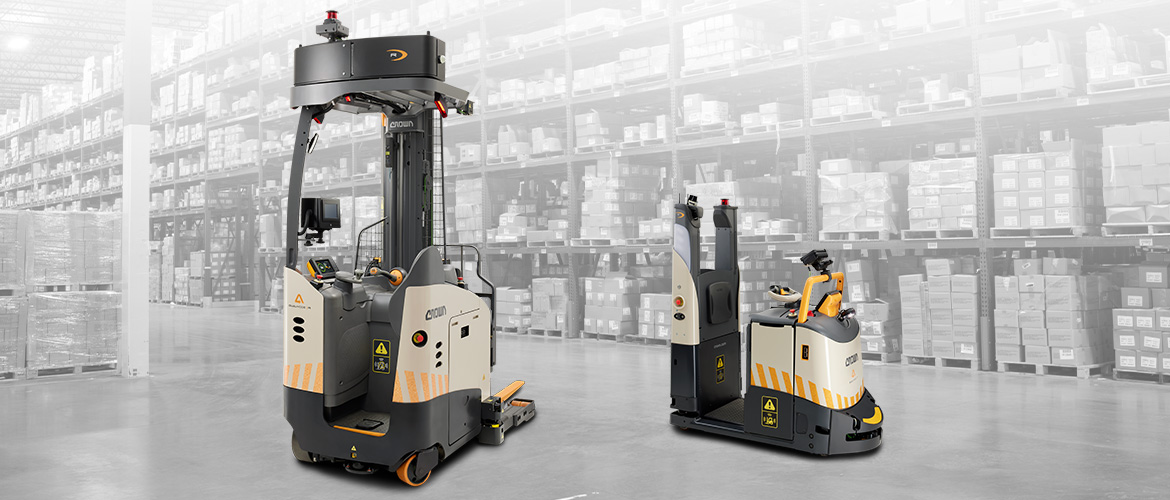
Crown OEM product illustration of automation options; not a documentary photo of a Watts customer implementation.
Decide how people will work around the system
Have the equipment supplier and the people responsible for site safety assess traffic, pedestrian interaction, operating boundaries, and foreseeable interruptions together. The evaluation needs to address the actual workplace and proposed equipment. Do not treat automated operation as permission to skip training or site assessment.
Ask who can recover a stopped task and what that recovery involves. Who responds on the second shift? Who can change a route? Where are changes recorded?
Crown’s DualMode equipment offers automated and manual operating modes. That can provide flexibility in suitable applications, but the change between modes still needs an agreed process and trained people. It is a capability to evaluate, not proof that a particular site is ready.
Build a pilot that can give a clear answer
Define the acceptance criteria before the pilot starts. Use the same task boundaries for the existing process and the proposed system.
| Pilot question | Evidence to collect |
|---|---|
| Does it complete the required work? | Completed movements within the required operating window |
| How often does someone intervene? | Intervention reason, frequency, and time to resume |
| What happens at busy periods? | Queues, missed handoffs, and recovery after interruptions |
| Can the team support it? | Response responsibilities, training completion, and service arrangements |
| Is the business case still credible? | Actual system, integration, support, and operating costs against the agreed benefit |
Choose criteria that matter to your operation; there is no universal pass score. Include a representative busy period and the exceptions the supplier has agreed to handle. Record the starting process so the comparison is meaningful.
Include the work after installation
Ask about software support, maintenance responsibilities, replacement parts, and who approves future changes. A new product size or a relocated production line may require the project assumptions to be revisited.
Crown describes application analysis and comprehensive planning as parts of its automation approach. Bring that same discipline to the commercial scope: identify what is included, what depends on another supplier, and what your team must provide.
Watts’ Crown dealer profile includes automation solutions. Contact Watts Equipment with one candidate workflow, its load details, and the problem you want to solve. Confirm the appropriate project team and scope before treating any equipment option as a complete implementation plan.