A fleet can have underused trucks and still be short of the right equipment at the busiest hour. The answer is not necessarily another truck—or removing the one with the lowest hours.
Review what each truck does, when its work overlaps with other tasks, and what happens if it is unavailable. Combine that picture with condition and cost records. You will have a better basis for deciding what to retain, reassign, replace, rent, or investigate further.

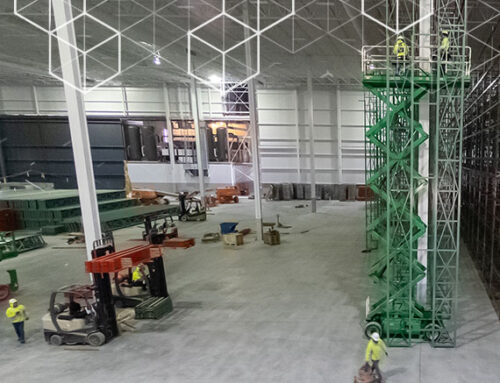
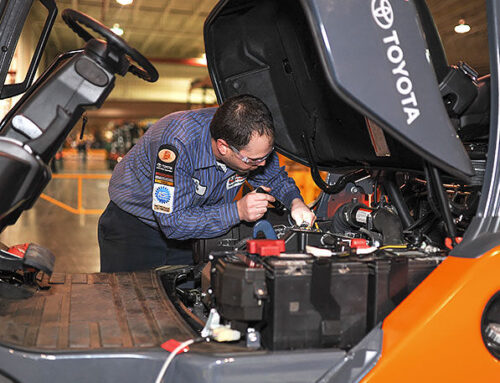
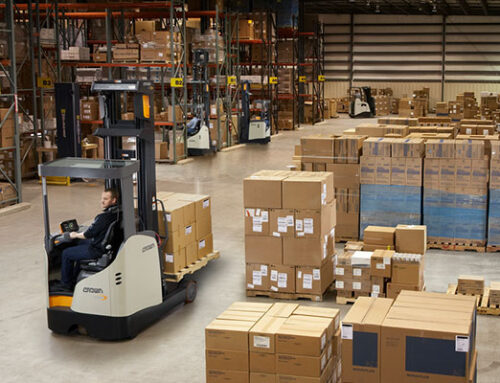
Photo: Crown Equipment, from its Crown Packaging customer story. This is not a Watts customer-site claim.
Define the jobs before counting trucks
List the handling tasks that must be covered: receiving, putaway, replenishment, picking support, production supply, and shipping. Include any specialized loads or attachments, high-lift needs, and access restrictions.
Then map the trucks that can actually do each job. Do not treat equipment as interchangeable because it has forks. Capacity, configuration, access, power arrangements, and operator readiness all affect whether a truck can cover a task.
This task map can reveal a hidden dependence. A lightly used specialty truck may be essential for a load that no other truck can handle. Its value is not captured by average hours alone.
Choose a representative observation period
Review enough ordinary and busy shifts to understand the work pattern. Include known seasonal conditions before making a permanent reduction based on a quiet week.
Collect consistent hour readings, operating records, charging or fueling interruptions, service downtime, and task delays. Talk with operators and supervisors about gaps in the data, then verify important explanations where possible.
Record the dates and definitions. If one report measures key-on time and another measures travel or lift activity, they are not interchangeable utilization figures. Crown’s fleet-management information describes using operational and maintenance data together; the measures still need to be interpreted in context.
Look at peak overlap, not just averages
An average can hide a short but important constraint. In a hypothetical fleet, three trucks might look lightly used over a full day yet all be needed during the same receiving window. Removing one based on the daily average could create a queue.
For the busiest intervals, record how many suitable trucks are required at the same time and how many are available. Explain unavailable time: service, charging, an attachment change, or assignment elsewhere. Keep delays caused by missing work or blocked locations separate from equipment shortages.
Crown’s Crown Packaging customer story illustrates why a company examined actual truck activity instead of relying only on the impression that every truck was fully used. It is one manufacturer’s customer example, not a promised result for your facility.
Build a review card for each truck
A compact record keeps the discussion focused:
| Review field | What to establish |
|---|---|
| Assigned work | Tasks, location, shifts, and any unique capability |
| Use | Defined activity measure, observation dates, and peak-period role |
| Condition | Recent inspections, open findings, and confirmed service needs |
| Cost | Comparable maintenance and operating records for the same period |
| Coverage | Which suitable truck or arrangement covers an interruption |
| Decision | Retain, reassign, repair, replace, seasonal rental, or investigate |
Add a confidence note when data is incomplete. “Investigate” is a valid decision if the missing information could change an expensive commitment.
Match the action to the finding
Retain a truck when it suits an established task and its support needs are understood. That includes deliberate backup capacity where the business case is clear.
Reassign equipment when demand is uneven and the truck is suitable for work elsewhere. Confirm the receiving site’s application and operator requirements before a move.
Repair or replace when condition, support, or fit warrants a separate evaluation. Compare alternatives over the same future period rather than using age alone.
Rent for a peak when temporary demand is the gap. Confirm availability and terms; a rental contact on a spreadsheet is not a reserved backup truck.
Investigate the process when trucks wait for locations, information, or ready loads. Buying equipment may not address that cause.
Test the plan before making it permanent
Where practical, trial an allocation change within approved operating procedures and monitor completed work, queues, and coverage. Keep the equipment available until the trial demonstrates that the required tasks can be covered. Do not interpret a quiet test period as proof that the next peak is protected.
Assign an owner and a review date to every action. Save the assumptions so the next fleet review can explain what changed in the business rather than reopening the same debate from memory.
Watts offers new and used equipment, rentals, and service. Bring the equipment list, task map, usage definitions, and unresolved gaps when you call 209-825-1700. That makes it easier to discuss a fleet that fits your work rather than a truck count in isolation.