A queue of pallets can make it look as if the warehouse needs another forklift. Sometimes it does. Sometimes the truck is waiting for a location, the next work area is full, or the shipment has not been released.
Before buying equipment, trace a representative load through the operation and record where it moves, where it waits, and why. Look for the delay that prevents orders from being completed, even when another area appears busier.
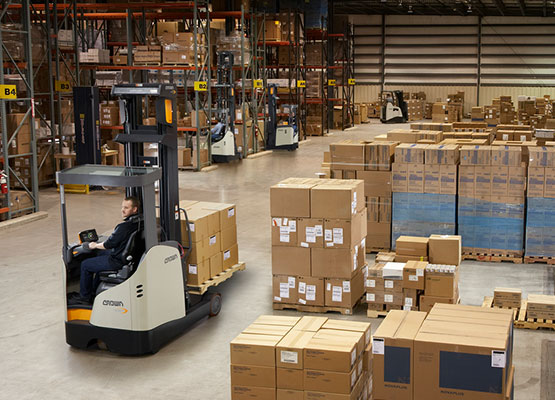
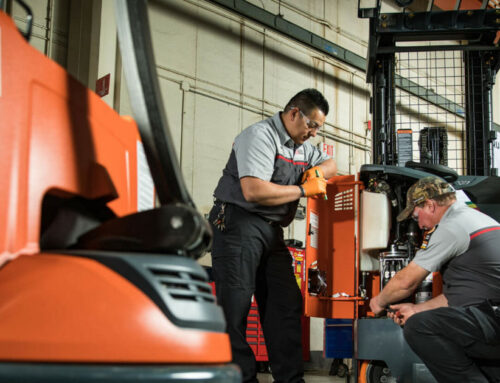
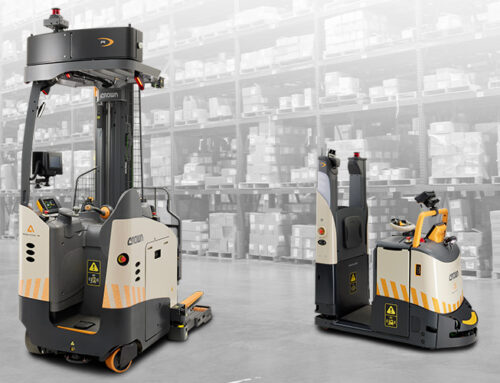
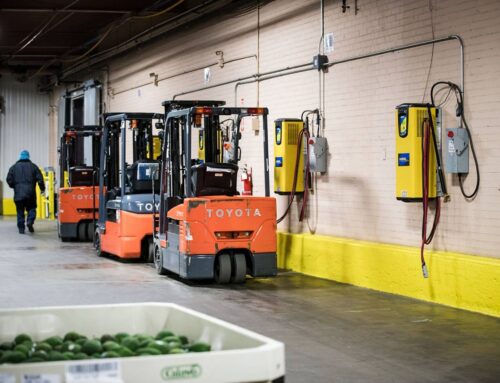
Photo: Crown Equipment. Illustrative material-handling application.
Start with a delayed outcome
Choose a measurable problem: inbound pallets not put away by the required time, replenishment arriving after pickers need it, or orders missing a shipping cutoff. Define the period and product group so you are comparing similar work.
Then observe that flow. Include people doing the work; they can explain why a visible pause occurred. Do not infer the reason from a stopwatch alone or turn the exercise into a ranking of individual drivers.
Keep the investigation safe. Observe from permitted locations and preserve established traffic and pedestrian controls. A measurement exercise is not a reason to obstruct an aisle or change operating procedures informally.
Follow the handoffs
For each stage, record when work became ready, when handling started, when it finished, and what blocked the next step. Include information readiness as well as physical movement.
| Stage | Questions to investigate |
|---|---|
| Receiving | Is the trailer ready, the load accessible, and the receiving information complete? |
| Staging | Is there an approved open location, or are earlier loads still occupying it? |
| Putaway | Is a location assigned and reachable with suitable equipment? |
| Replenishment | Was the need identified early enough, and is stock available to move? |
| Picking | Is the product in the expected location, with the required quantity? |
| Shipping | Is the order complete, released, documented, and assigned to a ready destination? |
You may find several pauses. Separate the one that limits the flow from delays that are inconvenient but do not affect completion. Repeat the observation across relevant shifts or demand conditions before deciding the first example represents the whole operation.
Distinguish waiting from handling
Imagine a pallet spends 20 minutes waiting for a putaway location and three minutes traveling there. Those numbers are hypothetical, but the distinction is important. Reducing travel by one minute would not resolve a location-assignment delay.
Label waiting by its observed reason: equipment unavailable, operator unavailable, location blocked, inventory discrepancy, documentation missing, or another specific cause. Use “unknown” when the cause has not been established. That prevents assumptions from becoming reported facts.
Count repeated handling too. If a load is moved to clear space and then moved again, record the extra touch and why it was necessary. Toyota’s peak-season guidance discusses product placement and reducing unnecessary moves; the right change depends on your own flow and requirements.
Test whether equipment is the constraint
An equipment shortage becomes more credible when suitable trucks are occupied with necessary work during the same interval that ready tasks wait. Check whether the equipment is actually available to the task, not just present somewhere in the building.
A truck may be charging, undergoing service, fitted with a different attachment, or unable to access the required location. That is different from a truck waiting because there is no ready work.
Crown’s fleet-management tools can provide operational and maintenance information to support this review. Whether you use telematics or manual observation, define what each measure means. An hour with the key on is not automatically an hour of productive handling.
Try one controlled change
Choose a change tied to the observed cause: clarify a location-release handoff, adjust an approved replenishment schedule, or trial suitable temporary equipment if capacity is genuinely missing. Set a comparison period and a success measure before starting.
For example, measure whether more orders meet the cutoff while checking that queues, extra handling, and safety concerns have not increased elsewhere. A faster receiving stage does not help if it only fills staging sooner.
Keep demand differences visible. If the trial week has much lighter volume, do not attribute every improvement to the change. Review the result with the people doing the work and decide whether to retain, adjust, or stop the trial.
Bring evidence to an equipment conversation
Prepare a short summary: delayed outcome, affected stages, observed waiting reasons, equipment requirements, and the result of any trial. Add the loads, access dimensions, and operating schedule if an equipment change is being considered.
Watts’ Crown dealer profile lists equipment, racking, battery, and automation solutions. That breadth makes it reasonable to discuss the handling problem as a whole; it does not mean every problem needs new technology.
Use Watts’ quote request or call 209-825-1700 with the work you need to improve. A documented bottleneck gives the equipment discussion a clear purpose and a result you can later measure.