The forklift you are replacing may have worked well when you bought it. Since then, your pallets may have grown, the racks may have changed, or receiving may have moved to a different part of the building. Ordering the same size truck can carry those problems into the next purchase.
To choose a forklift, start with four things: the load, the route it travels, the space it must work in, and the workload across a full shift. Then compare equipment configurations that fit those requirements.
At Watts Equipment, we offer new and used Toyota and Crown forklifts. That gives you several directions to explore. The useful first question is what needs to happen on your floor each day.
Bring the difficult load into the conversation
“We move pallets” is a start. A photo, dimensions, and a verified weight are much more useful. Gather those details for your everyday load and for the awkward one that arrives twice a month. Include the pallet or container in the total weight.
Weight alone does not determine the truck you need. Load dimensions, weight distribution, and attachments affect lifting capacity. A truck advertised with a particular capacity cannot necessarily handle every load of that weight. Toyota explains these factors in its guide to forklift capacities and data plates.
Give your dealer the intended attachment details and required lift height, too. Ask: “Can this configuration handle this load at our required height?” Treat the truck’s applicable data plate and operating instructions as the limits for its use.
An attachment should be part of that conversation from the beginning. Adding one later can change the capacity assessment; it is not simply an accessory choice.
Measure the turn as well as the aisle
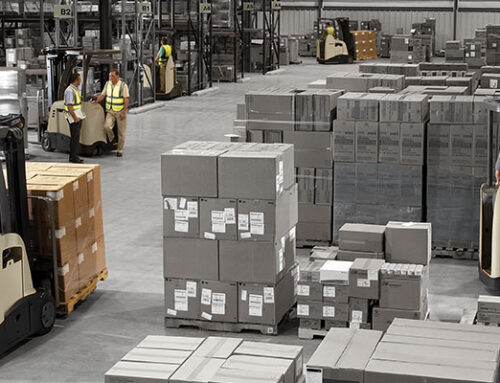
Walk from the unloading point to the storage position. Record the doorway that limits entry, the turn beside the staging area, and any outdoor section. A truck needs to complete the route with its load, not just fit into the building.
Measure the tight points instead of relying on estimates. Include overhead clearance and the height of the storage locations you need to reach. Toyota’s forklift buying guide highlights aisle width, lift height, and lowered mast height as selection considerations.
Check both ends of the lift: how high the forks must reach and how low the mast must be to pass through an entrance. Meeting the rack-height requirement does not settle the doorway question.
Have the dealer evaluate working clearance with the intended load. Space for a truck to travel through an aisle is not the same as space to turn and place a pallet.
Ask operators to point out the place where a move becomes awkward. If the same corner creates a problem every day, include it in the equipment discussion before requesting a final quote.
Decide what kind of work needs its own truck
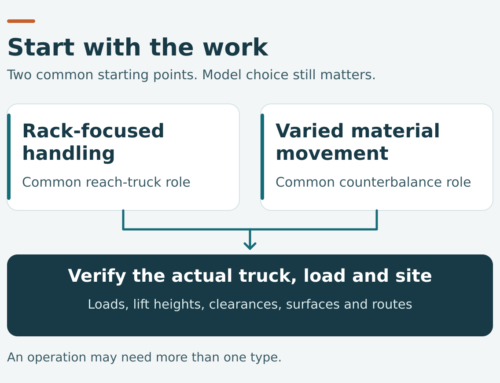
Start with the task, then narrow the category. Crown’s forklift lineup includes counterbalance forklifts, reach trucks, order pickers, pallet trucks, and stackers. They are worth comparing when your current forklift is doing several very different jobs.
Use the task list to narrow the discussion:
| Main task | Equipment category to discuss |
|---|---|
| Moving pallets horizontally between work areas | Pallet truck |
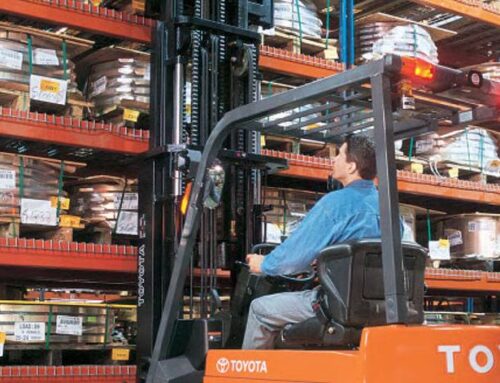
| Placing pallets into warehouse racks | Reach truck, stacker, or counterbalance forklift, depending on the layout and application |
| Picking individual cases or items from storage | Order picker |
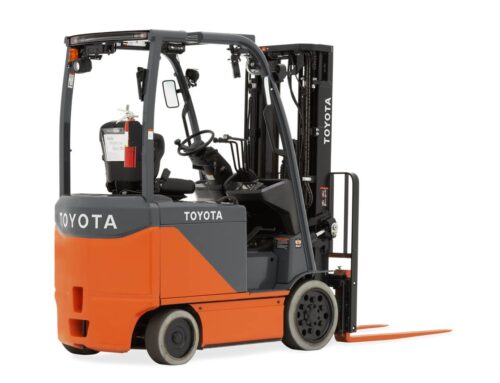
| Handling loads across receiving, shipping, and other work areas | Counterbalance forklift configured for the load and environment |
This is a starting point, not a model recommendation. Pallet design, floor conditions, capacity, and working clearances still need to be checked.
For example, imagine that most of a truck’s day is spent carrying pallets between two floor-level work areas, with only occasional rack placement. Ask whether those tasks belong on the same truck. The answer will depend on the workload, available space, and cost of adding another piece of equipment.
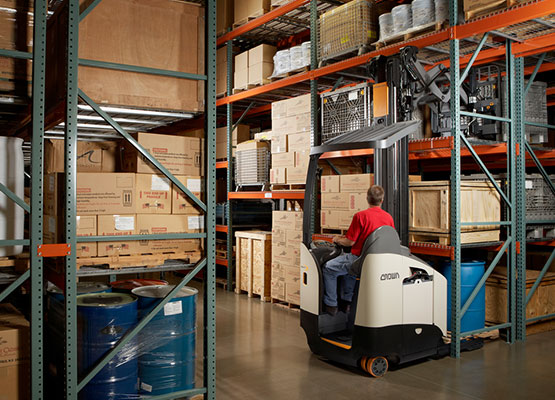
Crown manufacturer photo illustrating a reach-truck application; not a Watts customer or facility.
Describe the busiest hour
Record where the truck will work: inside, outside, or both. Include surface conditions, temperature changes, and any specialized operating requirements.
Then map out the working day. When does the first load arrive? How long are the busiest stretches? Are breaks predictable? For an electric truck, ask what charging arrangements that schedule needs. For an internal combustion truck, ask about fuel arrangements and suitability for the working environment. Have those requirements confirmed for the actual site.
Two facilities can each run one shift and still need different equipment plans. One might move pallets steadily; another might receive several trucks in a short morning window. Give your dealer that pattern, including the time available for charging or refueling.
Watts’ Crown dealer profile lists battery solutions and racking alongside equipment, parts, and service. If the purchase also involves charging arrangements or storage changes, raise those needs together and confirm the scope of support for your site.
Ask what the quote includes
Two quotes can both say “electric forklift” while covering different equipment. Ask each supplier to identify the model, mast, attachments, tires, battery, and charger, as applicable. Separate included equipment from options and any work your facility must arrange.
Use the same application profile for each quote. Keep a short list of open questions beside it: which requirements have been confirmed, which depend on a site review, and which accessories are optional?
Include support in the conversation. Watts provides forklift service and repair across makes, which matters if you are adding equipment to a mixed fleet. Ask how the proposed truck will fit into your maintenance arrangements and what information to keep available when requesting service.
Buying used equipment means checking the condition too
Once a used truck meets your application requirements, ask what has been evaluated on that particular machine. Request its available service history, inspection findings, and the details of any reconditioning. For an electric truck, ask specifically about the battery assessment and the charger included in the sale.
Toyota lists battery assessments, performance testing, and service-history reviews among possible used-equipment services, while noting that the process varies by dealer and equipment type. Confirm what was actually done and what documentation is available. An hour-meter reading is useful information, but it leaves those questions unanswered.
What to send Watts before requesting a quote
You do not need to arrive with a model number. Copy these prompts into an email and fill in what you know:
Job: We need to move ___ from ___ to ___.
Loads: Typical weight/dimensions ___; heaviest or unusual load ___; photos attached ___.
Space: Required lift height ___; narrowest working area ___; doorway and overhead restrictions ___.
Conditions: Indoor/outdoor route ___; surfaces and special conditions ___.
Schedule: Shifts ___; busiest period ___; charging or refueling arrangements ___.
Current truck: Model/configuration ___; the problem we want to solve ___.
Changes ahead: New products, storage changes, or expected demand ___.
If a measurement or load detail is uncertain, mark it for confirmation. That is more useful than building a quote around a guess.
Watts has served California’s Central Valley since 1967 and is based in Manteca. Send us your application details, or call (209) 825-1700. Include the problem you want the next truck to solve along with the measurements. That gives the equipment conversation a useful place to start.