The busiest week deserves its own equipment plan. An average month can hide the few days when receiving, replenishment, and shipping all need the same forklift at once.
For a harvest-related handling surge or holiday fulfillment period, build a seasonal rental plan around the work that overlaps. Identify the capacity gap, agree on delivery and return timing, and decide what happens if the peak arrives early or runs long.
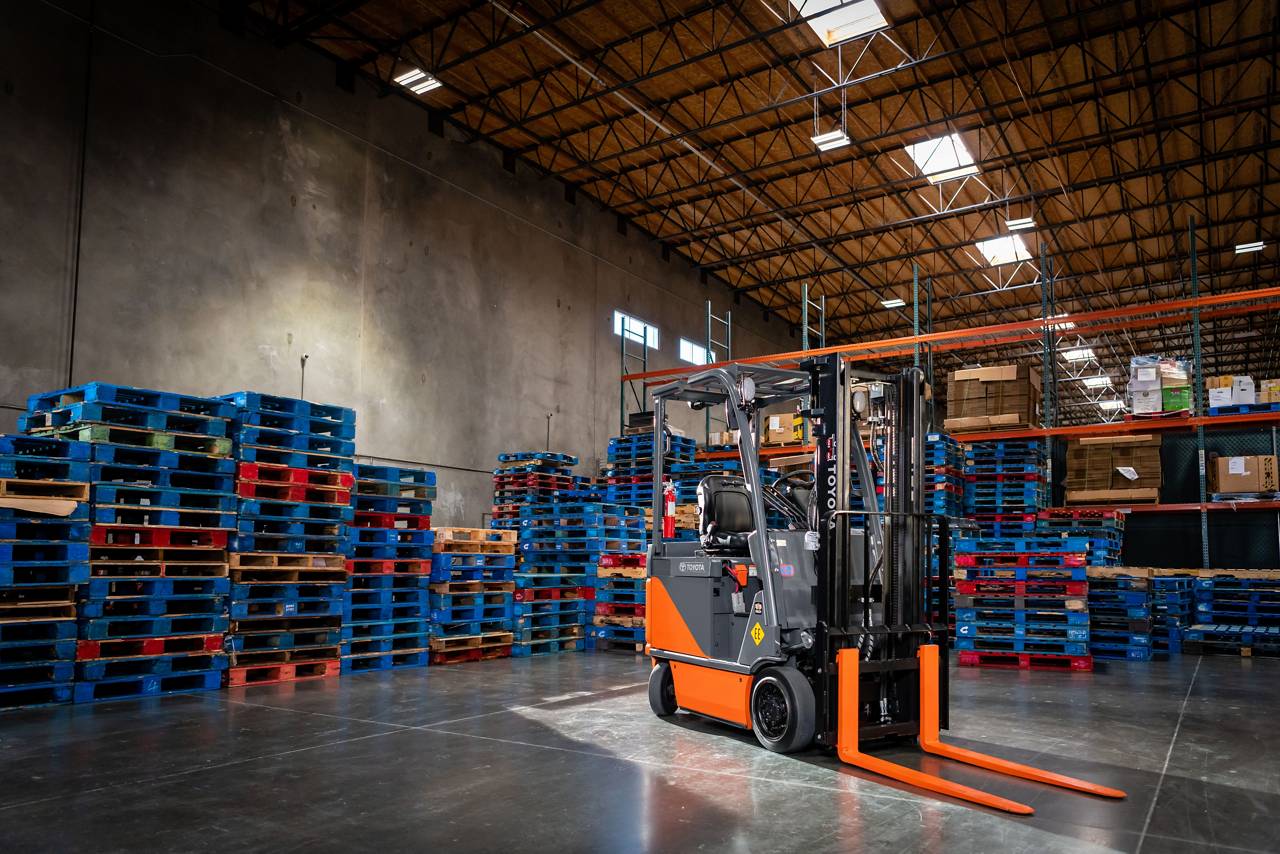
Photo: Toyota Material Handling. Illustrative warehouse equipment; confirm rental configuration and availability with Watts.
Map the peak by week and shift
Start with expected inbound loads, outbound orders, and replenishment tasks. Mark the weeks and shifts when each increases. Include known deadlines and the confidence you have in the forecast.
For a harvest-related operation, distinguish crop or supplier timing from the dates equipment will actually be needed at your facility. For holiday fulfillment, separate stock arrival, order picking, shipping, and returns. Those demands may peak at different times.
Review last season’s delays if records are available. Did work stop because no suitable truck was free, because product was not ready, or because a staging area was full? Extra equipment addresses only some of those problems.
Toyota’s peak-season guidance encourages reviewing equipment fit and product placement as demand changes. Use that review before turning a higher order forecast into a forklift count.
Find the task that needs temporary capacity
Write down where your existing trucks will be committed during the busiest interval. A rental request is stronger when it explains the uncovered task: unloading arriving pallets while the regular truck replenishes pick locations, for example.
Check whether the job needs the same type of truck as the rest of the fleet. Short-distance pallet movement, high-rack replenishment, and outdoor handling are different applications. Ask the rental provider to verify equipment fit against the actual loads, route, and placement requirements.
Include the operating support. Another electric truck needs an appropriate charging arrangement. Another truck also needs a prepared operator and space to work. Do not count it as available capacity until those requirements are addressed.
Plan for demand changes and equipment interruptions
You do not have to predict the exact peak to prepare for it. Create a base case, an earlier or larger peak, and a delayed or extended peak. Each scenario should name the action and the person who can authorize it.
| Scenario | Decision to prepare |
|---|---|
| Expected workload arrives on schedule | Confirm equipment, delivery, use period, and pickup arrangements |
| Volume rises or arrives earlier | Ask what additional capacity may be available; agree how to request a change |
| Volume arrives late or continues longer | Check cancellation, date-change, extension, and billing terms |
| A core truck becomes unavailable | Identify the work to protect and the service/rental contacts to call |
These are planning scenarios, not promises that equipment can be added on demand. Ask about availability early, then confirm the actual reservation and terms in writing. Avoid building a fallback plan around an unconfirmed spare.
Schedule preparation before production pressure builds
Choose the required readiness date first, then discuss delivery timing with the rental provider. Allow time for the agreed handoff, equipment checks, and operator preparation before assigning the truck to critical work.
Review planned service on the owned fleet as well. Bring upcoming service needs and known concerns to Watts’ service department rather than assuming a rental will cover every interruption.
Operator readiness includes the equipment and the workplace. For operations covered by California’s powered industrial truck training rule, employers must ensure appropriate training and evaluation; assignment to a different truck type triggers refresher training in relevant topics. Confirm the applicable requirements for your operation before the peak, including agricultural settings where the rule’s scope differs.
Review the plan while the rental is working
Assign someone to compare actual use with the forecast. Check whether the extra truck is serving the intended task and whether congestion or waiting has moved elsewhere. Record changes in operating hours, timing, or application and discuss them with the rental provider when they affect the arrangement.
Keep the expected finish date visible. Agree how to report that the rental is no longer needed, when charges end, and what is required while awaiting pickup. A truck standing idle after the rush still needs a clear return plan.
After the season, retain the dates, usage, delays, and lessons. That gives next year’s planner something better than “we usually rent another forklift around then.”
Bring Watts a demand timeline
Watts Equipment offers short-term, long-term, and seasonal forklift rentals, with delivery and pickup using its own trucks. Bring the team your busiest weeks, uncovered tasks, and likely changes in timing. Call 209-825-1700 to discuss equipment fit, availability, and the rental arrangement for your operation.