You know when the shipment is arriving. Before booking a forklift to unload it, you also need to know the load’s weight and dimensions, where the truck will travel, and how high it must lift. Those details determine whether the proposed rental can do the job.
Watts Equipment offers short-term, long-term, and seasonal rentals from Manteca, with delivery and pickup handled using its own trucks. Preparing the application and delivery details together helps you get beyond a general availability question and discuss a specific rental.
Here is what to gather, what to ask, and what to have ready when the equipment arrives.
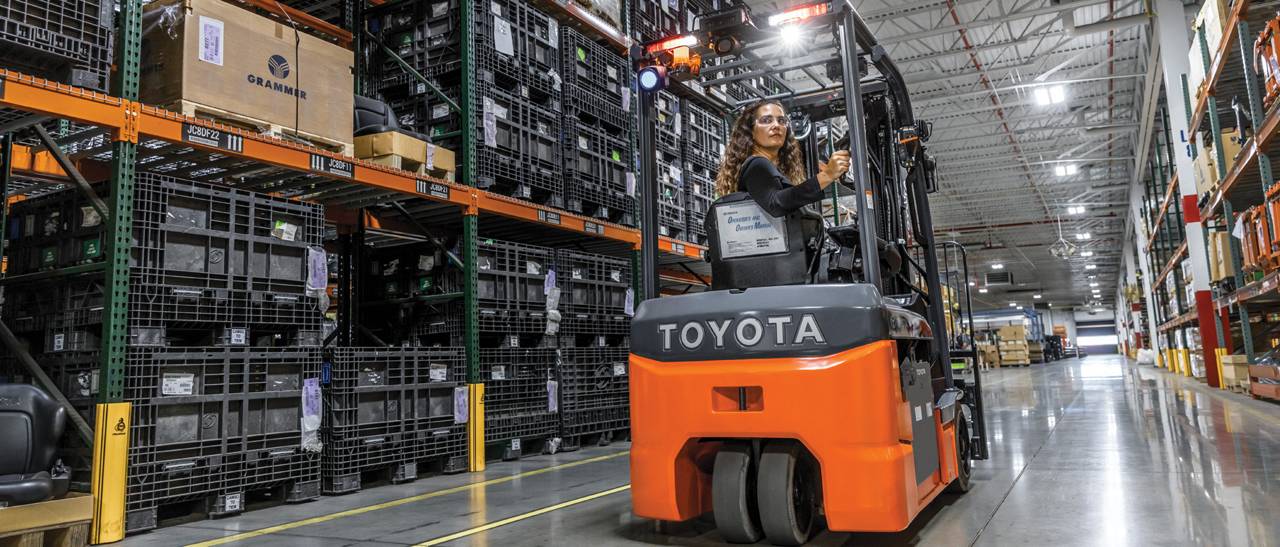
Photo: Toyota Material Handling. Equipment shown illustrates a warehouse application; confirm rental availability with Watts.
Before the quote: describe the job
Start with the load, including its packaging
Provide the heaviest load’s verified weight and dimensions, including the pallet, packaging, or container. Explain how it is supported and whether the job involves long materials, unusual shapes, or an attachment. Include the required placement height.
A request for a particular capacity is not enough by itself. Have the rental provider verify that the proposed truck and attachment configuration fit the load and task. California’s industrial truck rules prohibit loading beyond rated capacity and address capacity markings for attachments.
If you do not know the load weight, get reliable information from the supplier or another appropriate source before choosing equipment. Send photos to clarify the shape and handling arrangement, with measurements included.
Follow the entire route
Measure the tightest doorway, lowest clearance, and narrowest aisle the truck must use. Include turns, racks, trailers, or containers that affect access. Describe every surface along the route, including slopes and transitions between pavement and other ground conditions.
For example, a truck might unload outside but then need to pass through a low doorway to place the material inside. The outdoor unloading task is only part of the application. Share both parts with the rental team before equipment is selected.
If the route involves a trailer, dockboard, or elevated surface, arrange to have its suitability and capacity confirmed. “There is a loading dock” leaves too much unexplained.
Explain the working day
Provide estimated operating hours per day and the number of shifts. Say whether the work is indoors, outdoors, or both, and flag site restrictions or special environments.
For an electric rental, confirm the battery and charger arrangement, electrical compatibility, and a suitable charging location before delivery. Ask who supplies the charger, whether it arrives with the truck, and what your facility needs to provide. Put the charger and delivery arrangements in the written quote so they are checked at handoff. For fuel-powered equipment, discuss fuel arrangements and suitability for the work environment, including ventilation where relevant.
Use this rental inquiry as a starting point
Copy the outline below and fill in what you know. Mark unknown details for discussion rather than guessing.
Rental location and contact: [Address, city, receiving contact, phone]
Job: [What needs to move and where it needs to go]
Heaviest load: [Verified weight including pallet/packaging; dimensions]
Placement: [Required lift height; rack, trailer, container, or floor location]
Handling needs: [Load shape, support, attachment requirements]
Route: [Surfaces, tightest access measurements, slopes, restrictions]
Expected use: [Hours per day; shifts; indoor/outdoor]
Power arrangements: [Charging infrastructure or fuel needs to discuss]
Dates: [Requested delivery, first use, last use, and pickup]
Delivery access: [Gate instructions, access hours, receiving area]
Uncertainties: [Changing shipment dates, possible extension, missing measurements]
The goal is to make the job understandable. You do not have to choose the truck before asking for help.
Before booking: ask for the full rental terms
Once a suitable option is identified, review more than the base rate. Ask which operating hours are included, how extra hours are charged, and what happens if the job runs longer. Confirm delivery and pickup charges, cancellation terms, insurance requirements, and return-condition expectations.
Also clarify who supplies fuel or charging equipment, how to report a problem, and what servicing is included. Watts describes servicing support on its rental page; the agreement should establish the responsibilities for your particular rental, including damage and any exclusions.
A useful question is: “If our delivery is delayed or we need the truck for another week, what do we need to do?” Get the extension process and any changes in charges clear before the original rental ends. Also ask how to notify the provider that you are finished, when billing ends, and what your responsibilities are while awaiting pickup. Do not assume an extension is available just because the equipment is already at your site.
Before delivery: prepare access and operators
Give Watts a receiving contact who can be reached during the agreed delivery window. Confirm access instructions, a suitable receiving area, and who will coordinate the handoff. Arrange timing directly with the rental team rather than treating published office or dock hours as a confirmed delivery appointment.
Operator preparation belongs on the same schedule. For workplaces covered by California’s powered industrial truck training requirements, the employer must ensure operators are trained and evaluated for the equipment and working conditions. Assignment to a different truck type triggers refresher training in relevant topics, including evaluation; qualifying prior training need not be repeated.
At handoff, verify that the equipment matches the arrangement, document its condition with the provider, and confirm the manual and service contact. Establish the required beginning-of-shift checks and the process for reporting concerns while the truck is at your site. Renting the equipment does not remove those responsibilities.
Send Watts the details you have
For a planned project, seasonal workload, or temporary equipment need, request a forklift rental quote or call 209-825-1700. Use the inquiry above to prepare for the conversation and have photos and measurements ready to share through the method the rental team recommends.
Confirm fit, availability, terms, and delivery before committing the truck to your work schedule. That is the point at which a rental request becomes a workable plan.