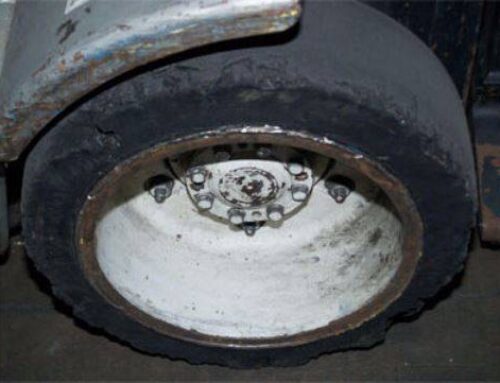
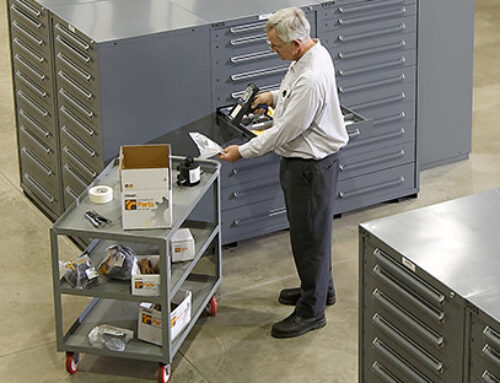
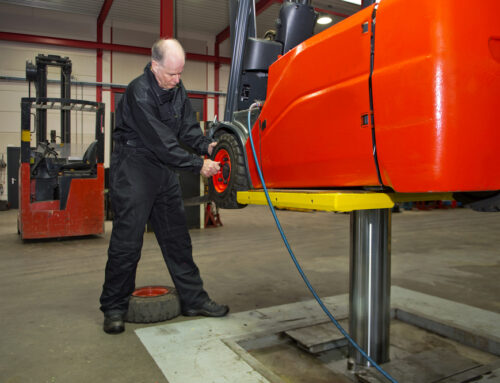
A photo of a broken component is useful. A photo plus the forklift’s model and serial number is a much better start. Before ordering forklift parts, identify the truck, explain which component needs attention, and have the supplier confirm compatibility.
That extra preparation matters most when a truck is already unavailable. An incorrect part adds another shipment and another round of questions to a repair that your operation is waiting on.
Photo: Toyota Material Handling. Manufacturer parts imagery.
Identify the truck before identifying the part
Record the make, complete model number, and serial number exactly as shown on the equipment. A clear photo of the data plate can reduce transcription mistakes. Keep the typed details too, so the parts team does not have to decipher a reflection or blurred label.
Toyota’s parts lookup guidance uses the model and serial number together to identify parts for the specific truck. A familiar model name or approximate year leaves more uncertainty than those identifiers.
If the plate is missing or unreadable, tell the supplier that first. Send whatever verified identifiers you have and ask how to establish the equipment’s identity. Do not fill in a serial number from a similar truck nearby.
Watts Equipment’s forklift parts request includes fields for the equipment model and serial number. Preparing those details before opening the form makes the request more useful from the start.
Separate the symptom from the part you suspect
Describe the problem in plain language: where it occurs, when it started, and what was observed. Include any displayed code exactly as recorded. Then distinguish a technician’s diagnosis from your own suspicion.
For example, “technician identified this component for replacement” is different from “we think this is causing the warning.” The second situation may need diagnosis before a purchase. Replacing a part based only on a guess can leave the original fault unresolved.
If the truck is unsafe, remove it from service through your workplace process. Gathering information for an order is not a reason to keep operating it or recreate a fault. California’s industrial truck rules require unsafe equipment to remain out of service until made safe.
Photograph the component in context
When it is safe and accessible without disassembly, take a wider view showing where the part sits and a closer view of labels or markings. Include connectors or mounting details if the supplier requests them. A close-up alone can hide the information needed to understand what you are showing.
Record any visible number, but let the parts team determine whether it is an orderable part number, a casting identifier, or another marking. Explain if the item belongs to an attachment or other separately identified assembly; include that assembly’s identification when available.
Do not remove guards or dismantle equipment to improve a photo. Have qualified service personnel obtain information that requires access beyond an ordinary safe inspection.
Send one complete inquiry
Use this outline when contacting the parts department:
Truck: make, model, serial number, and equipment ID.
Component: name if known, location, and visible markings.
Diagnosis: technician-confirmed replacement or concern still being investigated.
Attachments: relevant identification and configuration.
Supporting files: clear data-plate photo and safe component photos.
Quantity: number required and whether a complete kit is needed.
Timing: truck status, requested delivery location, and date needed.
Contact: person who can answer equipment questions.
State the date you need the item, then ask what is actually available. A requested deadline is not a confirmed arrival date.
Check the quote before approving it
Confirm that the quoted part is matched to your equipment, including any superseded number or required companion components. Ask whether you are buying one item or a kit, whether installation is included, and what return restrictions apply. Special-order and installed items may have different terms; get the actual policy before ordering.
Ask about the part’s source, warranty terms, and expected dispatch or arrival timing. If a substitute is offered, request confirmation of fit and application suitability rather than treating visual similarity as proof.
Keep the written confirmation with the repair record. When the shipment arrives, compare its identification and contents with the approved order before installation. Have qualified personnel handle the repair and any required checks.
Start with the information Watts needs
Watts lists Toyota Genuine Parts and Crown Integrity Parts among its offerings, along with parts support across makes. Use the parts request linked above or call 209-825-1700 with your equipment identifiers ready. If the problem still needs diagnosis, ask about forklift service before committing to a replacement component.