
California’s New Regulations Could Impact Your Business
Across the United States, around 60% of material handling operations currently rely on electric forklifts. However, in California, this figure could soon rise to nearly 100%. The California Air Resources Board (CARB) has proposed new regulations that will gradually phase out internal combustion (IC) forklifts to achieve a goal of zero emissions by 2035, aiming to reduce air pollution and improve air quality. Here at Watts Equipment, we are actively collaborating with CARB to better understand these changes and to guide you, our valued customers, in preparing for the upcoming regulations set to take effect in January 2026.
Understanding CARB and Its Initiatives
 The California Air Resources Board (CARB) is working on a new mandate that will require the use of zero-emission forklifts in fleets across the state starting in 2026. This initiative, known as the Zero-Emission Forklift Measure, was endorsed by Governor Newsom’s Executive Order N-79-20, which was signed in September 2020.
The goal of this measure is to accelerate the adoption of zero-emission forklift technology throughout California, significantly reducing emissions of nitrogen oxides (NOx), fine particulate matter (PM), and other harmful pollutants, including toxic air contaminants and greenhouse gases (GHG).
Everything You Need to Know About Transitioning to Electric Forklifts
Starting January 1, 2026, new regulations in California will restrict the acquisition, possession, and operation of specific forklifts, particularly large spark-ignition (LSI) forklifts in Class IV and Class V with a lift capacity of 12,000 pounds or less. Fleet operators must phase out internal combustion (IC) forklifts older than 10 years and transition to zero-emission models. Different phase-out schedules apply to Class IV and Class V forklifts.
Not all forklifts are affected by these regulations, and several exemptions exist to ease the transition. For example, fleets can rent LSI forklifts for unexpected needs or seasonal surges, and a low-use exemption allows some forklifts to be kept if used fewer than 200 hours per year, limited to 10% of a fleet’s total units. Microbusinesses with fewer than 25 employees and under $5 million in annual revenue can keep one low-use forklift indefinitely.
Phase-Out Schedule
The replacement obligations for forklifts depend on fleet size:
- Small Fleet: Up to 25 forklifts owned by the same entity.
- Large Fleet: 26 or more forklifts owned by the same entity.
Both affected forklifts and zero-emission forklifts are counted, excluding pallet jacks.
- Class IV Forklifts: For large fleets, units from 2018 and older must be phased out starting January 1, 2028, while small and agricultural fleets must phase out units from 2016 and older by January 1, 2029.
- Class V Forklifts: All units from 2017 and older must be phased out by January 1, 2030.
Exceptions to the Regulation
Certain forklifts are exempt from these new regulations, including rough-terrain forklifts, pallet jacks, military combat and tactical support equipment, forklifts with a permanently integrated telescoping boom, those equipped with a diesel or alternative diesel-fueled off-road compression-ignition engine, and forklifts operated by facilities regulated under the Mobile Cargo Handling Equipment rules at ports and intermodal rail yards.
Low-Use Exemption
– Applies to forklifts used for 200 hours or less per year.
– Eligible forklifts must be from model years 2013 to 2025.
– There is no limit on the number of low-use forklifts a fleet can maintain.
– Fleet operators must report annual operating hours with a photo of the hour meter, and a specific label must be affixed to each exempt forklift.
– This exemption will expire on January 1, 2031, except for microbusinesses, which can keep one low-use forklift indefinitely.
Compliance Extensions
Extensions for compliance are available but are subject to specific eligibility criteria. Note that any extension granted is specific to the fleet and cannot be transferred to another fleet. Possible reasons for extension eligibility include:
– Forklift delivery delays
– Infrastructure issues
– Delays in infrastructure construction
– Delays in site electrification for infrastructure
How Will Your Business Be Impacted?
Transitioning from internal combustion forklifts to electric forklifts represents a significant investment for many businesses. This shift will require the purchase of new forklifts, batteries, chargers, and necessary upgrades to your facility’s infrastructure to ensure adequate power for charging your fleet.
Additionally, employees will need extensive training to safely and effectively operate electric forklifts. This includes training on proper charging techniques, maintenance procedures, and safe practices around charging stations, all mandated by OSHA.
At Watts, we are here to support you throughout this transition. Contact Us to help plan and manage this change for your business.
The Advantages of Electric and Zero Emission Forklifts
Switching to electric forklifts offers numerous benefits for your business, employees, products, and the environment. Here are some key points to consider:
– Reduced Fuel Costs: Save money by eliminating the need for fuel.
– Less Noise: Electric forklifts operate much more quietly than their IC counterparts.
– Lower Emissions: Contribute to a cleaner environment with zero-emission forklifts.
– Lower Operating Costs: Electric forklifts often have fewer moving parts, resulting in reduced maintenance costs.
– Energy Rebate Programs: Take advantage of available incentives for using energy-efficient equipment.
Quarterly Incentives for Using Electric Equipment
Earn quarterly payments for using or transitioning to electric equipment! The California Air Resources Board (CARB) provides incentives for businesses that operate zero-emission electric equipment.
Owners of electric forklifts and vehicles in California and Oregon can receive cash incentives through CARB’s Low Carbon Fuel Standard (LCFS) program. This initiative is designed to reward businesses that contribute to a cleaner environment by utilizing electric equipment.
Tax Deductions on Forklift Purchases
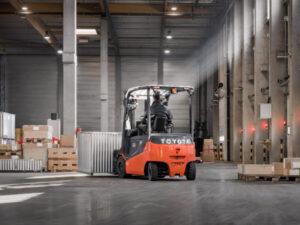 U.S. companies can benefit from substantial tax deductions on forklift purchases. Businesses are eligible to deduct the full purchase price of all qualifying equipment, up to a maximum of $1,160,000.
Additionally, businesses can take advantage of an 80% bonus depreciation on both new and used equipment throughout the year. This allows for significant savings when upgrading or expanding your equipment fleet.
For more information or to take advantage of these opportunities, please Contact Us .
OFFICE LINE
1.209.825.1700
WORKING HOURS
7:30am – 5:00pm
FAX LINE
1.209.825.1511
OFFICE LINE
1.209.825.1700
WORKING HOURS
7:30am – 5:00pm
FAX LINE